

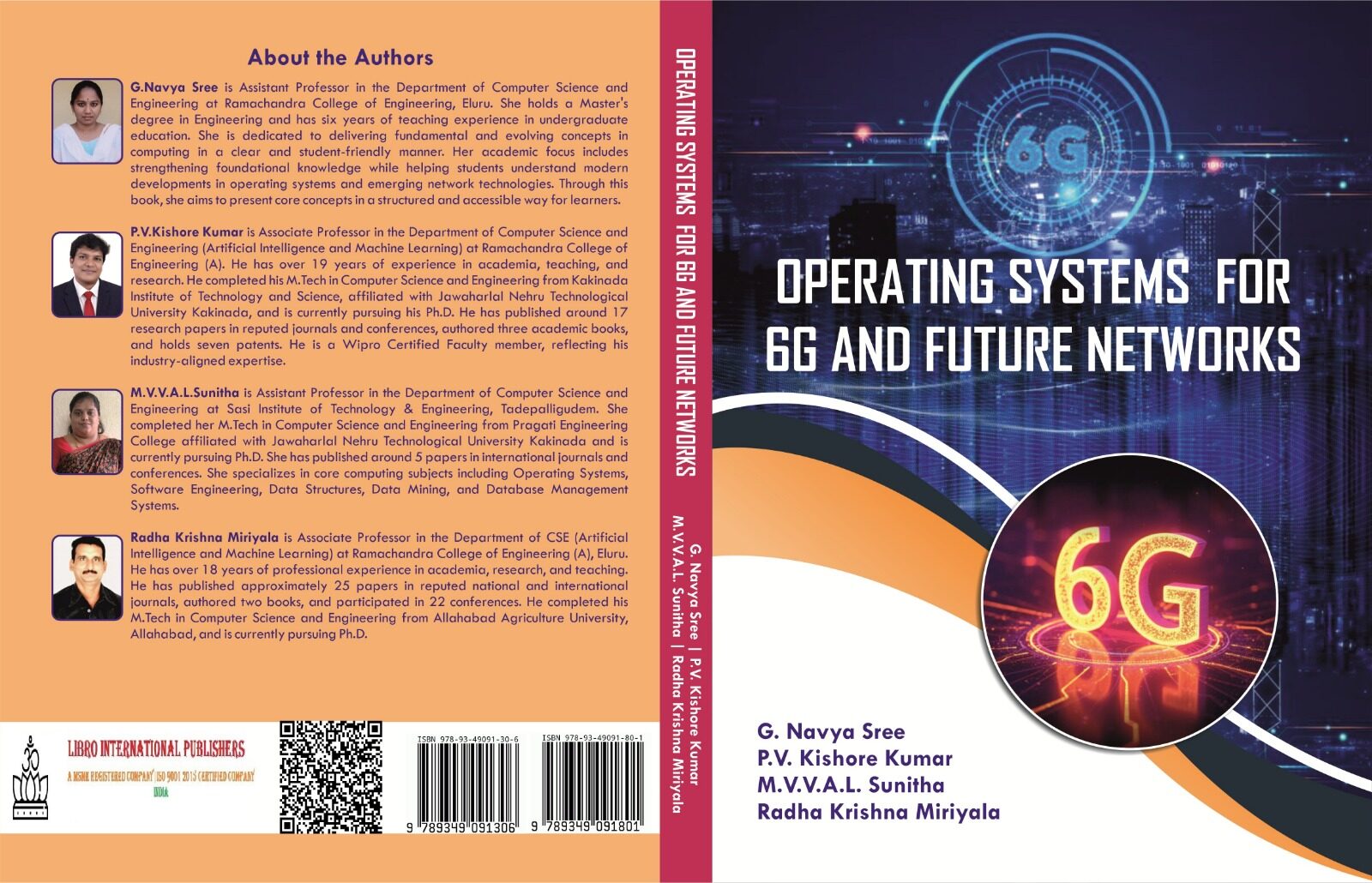
The rapid evolution of communication technologies has significantly transformed the way modern computing and networking systems operate. With the emergence of 6G and next-generation network infrastructures, there is a growing demand for advanced operating systems capable of supporting ultra-high-speed communication, intelligent resource management, and large-scale distributed computing environments. The integration of artificial intelligence, edge computing, cloud-native architectures, and the Internet of Things (IoT) into communication systems has further expanded the role of operating systems in managing complex and dynamic network ecosystems.
This multi-author volume titled “Operating Systems for 6G and Future Networks” aims to provide a comprehensive understanding of the evolving relationship between operating systems and next-generation communication technologies. The book brings together contributions from researchers, academicians, and industry professionals who have extensive expertise in operating systems, wireless networks, distributed computing, and emerging communication infrastructures. Each chapter presents insights into both the theoretical foundations and practical implementations of operating systems designed to support future networking paradigms.
The development of 6G networks introduces unprecedented requirements such as ultra-low latency, massive device connectivity, intelligent network orchestration, and highly secure communication environments. These challenges demand operating systems that are capable of managing virtualized network functions, edge and fog computing resources, real-time data processing, and AI-driven network management. This book explores how modern operating system architectures are evolving to meet these demands through innovations in scheduling, resource allocation, virtualization, containerization, and distributed system design.
The chapters in this book cover a wide range of topics including cloud-native operating systems, edge and fog computing platforms, virtualization technologies, container orchestration, software-defined networking (SDN), network function virtualization (NFV), and AI-enabled resource management. Special attention is given to the role of operating systems in supporting emerging technologies such as 6G communication systems, smart cities, autonomous systems, and large-scale IoT environments.
This book is intended to serve as a valuable resource for undergraduate and postgraduate students, research scholars, academicians, and professionals working in the fields of computer science, information technology, telecommunications, and network engineering. It is our hope that this volume will contribute to a deeper understanding of how operating systems will shape the future of communication networks and enable the next generation of intelligent and connected systems.
The authors would like to express their sincere appreciation to all contributing researchers and collaborators whose dedication and scholarly efforts made this book possible. Their diverse perspectives and expertise have greatly enriched the quality and scope of this volume. We also extend our gratitude to the publisher for their support and guidance throughout the preparation and publication of this work.
We hope that “Operating Systems for 6G and Future Networks” will inspire further research and innovation in the development of advanced operating system technologies that will support the evolving demands of future communication networks.










Reviews
There are no reviews yet.